
Quick answer
- Angkor Pass: $37 for 1 day, $62 for 3 days, $72 for 7 days. Buy it from the official Angkor Enterprise website or ticket office.
- Plan: Day 1 Angkor Wat sunrise and the small circuit, Day 2 the grand circuit, Day 3 Banteay Srei and a distant temple.
- Transport: a tuk-tuk with driver costs about $18–20 a day for the small circuit and $25–35 for longer routes.
- Budget: about $200–300 per person for 3 days on a backpacker budget, or $450–700 mid-range, including the pass.
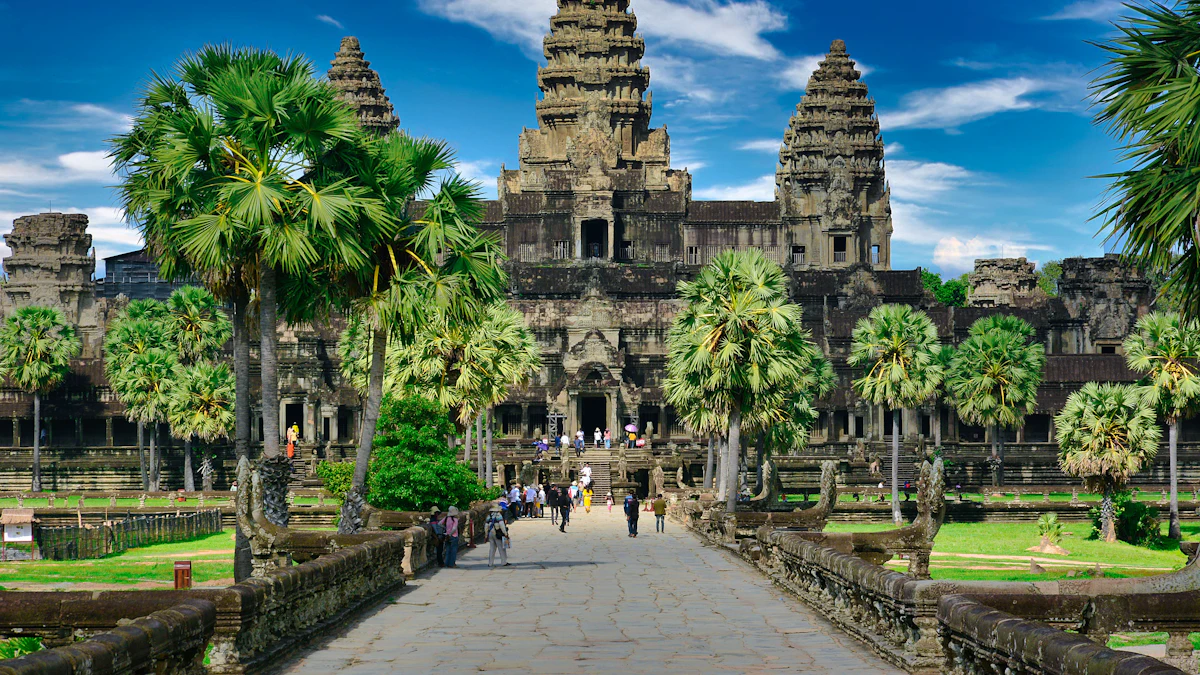
Angkor is one of the largest religious sites in the world: hundreds of temples spread across the forest north of Siem Reap, built by the Khmer Empire between the 9th and 13th centuries. Three days is the ideal time to see the famous temples without rushing, plus a few quieter ones away from the crowds.
Getting to Siem Reap
- By air: the new Siem Reap–Angkor International Airport (SAI), opened in 2023, is roughly 40–50 km from town. The official shuttle bus costs about $8 and takes around an hour; taxis and private cars cost more. Many hotels offer free pickup.
- By bus: from Phnom Penh, about six hours.
- From Thailand: all Thailand–Cambodia land borders have been closed since June 2025, so fly from Bangkok instead.
Most visitors need a Cambodian visa. The official tourist e-visa costs $30 plus a small processing fee and allows a 30-day stay. Apply only on the government portal.
The Angkor Pass
| Pass | Price | Best for |
|---|---|---|
| 1 day | $37 | Sunrise, Angkor Wat, Angkor Thom and Ta Prohm only |
| 3 days | $62 | The best choice for most visitors |
| 7 days | $72 | Photographers and temple lovers |
Buy the pass online from the official Angkor Enterprise website or at the official ticket office; a photo is taken or uploaded for your pass. Multi-day passes do not have to be used on consecutive days, but must be used within a set period, so check the validity when you buy. Keep the pass with you: guards check it at the main temples.
Dress code: shoulders and knees must be covered to climb the upper levels of Angkor Wat and enter other active temples. Bring a scarf or light long trousers.
Day 1: Angkor Wat sunrise and the small circuit
Leave around 4:45 am to watch sunrise at Angkor Wat from the reflecting pools. Stay after the crowds leave for breakfast and explore the galleries and bas-reliefs while it is still cool.
Next, enter the walled city of Angkor Thom through the South Gate. See the giant stone faces of the Bayon, the Baphuon temple, and the Terrace of the Elephants. After lunch, visit Ta Prohm, where huge tree roots grow over the ruins. Finish at Ta Keo or Banteay Kdei.
Day 2: The grand circuit
The grand circuit loops around the outer temples, which are bigger, quieter and wonderful for photos. Visit Preah Khan, a maze of corridors and courtyards; Neak Pean, a temple on an island in an artificial lake; Ta Som, with a tree growing over its gate; and the East Mebon. End with sunset from the top of Pre Rup.
Day 3: Banteay Srei and beyond
Drive about 40 minutes north to Banteay Srei, a small pink sandstone temple with the finest carvings at Angkor. Combine it with Kbal Spean, a short jungle hike to carvings in a riverbed, or go east instead to Beng Mealea, a huge, collapsed temple swallowed by the jungle. Both need a car or a longer tuk-tuk day; Beng Mealea charges its own separate entry fee.
Spend your final evening in town: Pub Street and the night markets for food and shopping, or a performance of Phare, the Cambodian circus.
Getting around the temples
| Option | Approximate price | Notes |
|---|---|---|
| Tuk-tuk with driver, small circuit | $18–20 per day | Same price for one to several people |
| Tuk-tuk, grand circuit or farther temples | $25–35 per day | Banteay Srei and Beng Mealea cost more |
| Private car with air-conditioning | $35–60 per day | Best for hot months and distant temples |
| Bicycle or e-bike | $2–10 per day | Fine for the small circuit if you start early |
| Licensed guide | $35–50 per day | Worth it for the history on day one |
How much do 3 days at Angkor cost?
| Item | Backpacker | Mid-range |
|---|---|---|
| Angkor 3-day pass | $62 | $62 |
| Accommodation (3 nights) | $30–60 | $120–240 |
| Food and drinks | $30–45 | $70–120 |
| Tuk-tuk or car (3 days) | $65–90 | $110–170 |
| Guide, extras, Beng Mealea entry | $10–40 | $60–110 |
| Total | about $200–300 | about $450–700 |
Prices are per person, in US dollars, for two people sharing transport, without flights. US dollars are used everywhere in Siem Reap alongside the Cambodian riel.
Best time to visit Angkor
November to February is the most comfortable: dry and less hot. March to May is very hot, so start very early and rest at midday. The rainy season from June to October brings green forests, fewer visitors and dramatic skies, with heavy afternoon showers.
Tips for visiting Angkor
- Start early. The temples are coolest and quietest in the first hours after sunrise.
- Drink lots of water and wear sunscreen and a hat.
- Agree on the route and price with your tuk-tuk driver the evening before.
- Do not touch or climb on carvings, and follow the signs at restricted areas.
- Bring small US dollar notes for drinks, tips and tuk-tuks.
Angkor is a highlight of our Southeast Asia in 3 weeks route. Compare prices in our Southeast Asia travel costs guide and add Cambodia to your travel map.
Frequently asked questions
Is one day enough for Angkor Wat?
One day covers Angkor Wat, Angkor Thom and Ta Prohm, but it is rushed. Three days lets you add the grand circuit and Banteay Srei at a relaxed pace.
How much is the Angkor Wat ticket?
$37 for one day, $62 for three days and $72 for seven days. Buy it from the official Angkor Enterprise website or ticket office.
Can I travel from Bangkok to Siem Reap by land?
Not at the moment. Thailand–Cambodia land crossings have been closed since June 2025, so the practical option is a direct flight.
Do I need a guide at Angkor?
No, but a licensed guide on your first day adds a lot of history and context. After that, a tuk-tuk driver who knows the routes is enough.
What should I wear to Angkor Wat?
Light clothes that cover your shoulders and knees, comfortable shoes for steep steps, and a hat.