
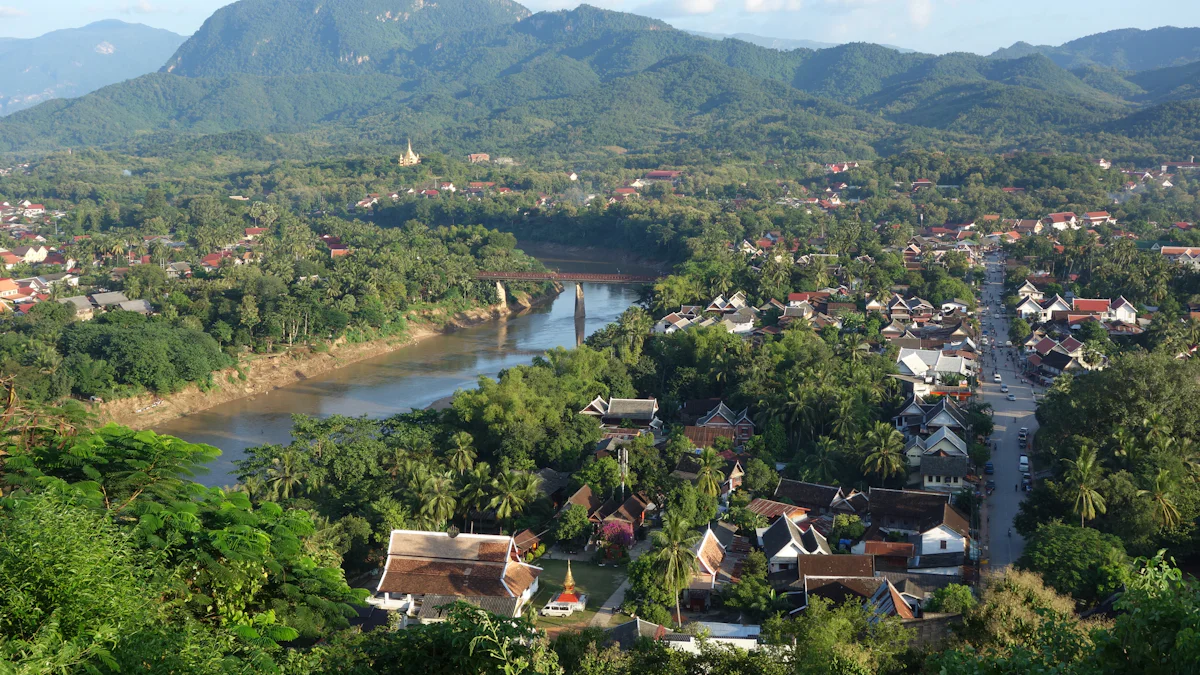
Quick answer
- Route: Luang Prabang (3 days) → Vang Vieng (2 days) → Vientiane (2 days), linked by the fast Laos–China Railway.
- Budget: about $250–400 per person on a backpacker budget, or $550–900 mid-range, not counting flights to Laos.
- Visa: many nationalities get a visa on arrival (about $30–42, paid in US dollar cash) or an eVisa for certain entry points.
- Best time: November to February: dry and pleasantly cool.
Laos is the slowest and calmest country in Southeast Asia, and that is its charm. A new high-speed railway now links its three most visited towns, so one week is enough to see the temples of Luang Prabang, the limestone valley of Vang Vieng and the riverside capital, Vientiane, without long bus rides.
Before you go
- Visa on arrival: available to many nationalities at international airports and main land borders. The fee depends on your passport, usually around $30–42, and must be paid in US dollar cash. Bring a passport photo.
- eVisa: the official Lao eVisa portal (laoevisa.gov.la) issues tourist visas in advance, but they are valid only at certain airports and border crossings. Check that your entry point is on the list.
- Money: Laos uses the kip. Carry cash; ATMs exist in the main towns but charge a fee, and many guesthouses and restaurants do not take cards.
- Getting there: fly into Luang Prabang or Vientiane, take the train from China, or cross from Thailand at one of the Friendship Bridges or by Mekong slow boat.
Visa rules differ by passport and change often. Check the official Lao government information before you travel.
The 7-day plan at a glance
| Day | Where | Highlights |
|---|---|---|
| 1 | Luang Prabang | Arrive, Mount Phousi sunset, night market |
| 2 | Luang Prabang | Alms giving at dawn, temples, Royal Palace |
| 3 | Luang Prabang | Kuang Si Falls, Pak Ou Caves by boat |
| 4 | Vang Vieng | Train south, Blue Lagoon, sunset viewpoint |
| 5 | Vang Vieng | Kayaking or tubing, caves, optional balloon ride |
| 6 | Vientiane | Train to the capital, Pha That Luang, Patuxai |
| 7 | Vientiane | COPE Centre, Buddha Park, fly home or cross to Thailand |
Days 1–3: Luang Prabang
This UNESCO-listed town of temples, French colonial houses and riverside cafés is the highlight of Laos. Climb Mount Phousi for sunset on your first evening and walk the night market on the main street.
On day two, get up before dawn to watch the alms giving, when monks collect sticky rice from residents. Watch quietly from a distance, do not use flash and do not join in unless you do it respectfully with food bought from a local source. Then visit Wat Xieng Thong, the most beautiful temple in town, and the Royal Palace Museum.
On day three, take a tuk-tuk or minivan to Kuang Si Falls, with turquoise pools for swimming and a bear rescue centre at the entrance. In the afternoon, take a boat up the Mekong to the Pak Ou Caves, filled with thousands of Buddha statues.
Days 4–5: Vang Vieng
The Laos–China Railway reaches Vang Vieng in about an hour. Tickets go on sale about a week before travel through the official LCR Ticket app and at stations; book as soon as sales open, because trains often sell out.
Vang Vieng has moved on from its party past and is now an outdoor base. Swim in the Blue Lagoon, explore the caves, kayak or tube down the Nam Song river, and hike to a viewpoint for sunset over the limestone peaks. Hot-air balloon flights at sunrise or sunset are a highlight if your budget allows.
Days 6–7: Vientiane
Another short train ride brings you to the capital. Vientiane is quiet for a capital city: see the golden stupa of Pha That Luang, climb the Patuxai monument, and walk the Mekong riverside night market at sunset.
On the last day, visit the COPE Visitor Centre, which explains the impact of unexploded bombs from the Vietnam War era, and take a bus to the strange and photogenic Buddha Park. From Vientiane you can fly home, or cross the Friendship Bridge to Nong Khai in Thailand.
How much does a week in Laos cost?
| Item | Backpacker | Mid-range |
|---|---|---|
| Accommodation (6 nights) | $60–120 | $250–450 |
| Food and drinks | $60–90 | $140–220 |
| Trains (2 legs) | $20–40 | $30–60 |
| Local transport and tuk-tuks | $30–50 | $60–100 |
| Entry fees and activities | $40–70 | $70–150 |
| Total | about $250–400 | about $550–900 |
A hot-air balloon flight in Vang Vieng costs extra. Prices are per person, in US dollars, without flights to Laos.
Best time to visit Laos
November to February is dry and cool, with comfortable days and chilly mornings in the north. March to May is very hot, and the north can be hazy from crop burning. June to October is the rainy season: landscapes are green and prices lower, but some roads and waterfalls are less accessible.
Tips for Laos
- Carry US dollars for the visa on arrival and some kip for daily spending.
- Dress modestly in temples and towns: cover shoulders and knees.
- Stay on marked paths in rural areas, where unexploded bombs remain a risk.
- Book trains early and keep your passport handy; it is needed to buy tickets and board.
- Slow down. Laos rewards a relaxed pace more than a packed schedule.
Laos fits perfectly into a multi-country trip with Thailand, Cambodia and Vietnam. See our Southeast Asia in 3 weeks route and Southeast Asia travel costs, and add Laos to your travel map.
Frequently asked questions
Is one week enough for Laos?
Yes, for Luang Prabang, Vang Vieng and Vientiane. With two weeks you can add the slow boat from Thailand, the northern mountains around Nong Khiaw, or the 4,000 Islands in the south.
How fast is the train in Laos?
Luang Prabang to Vang Vieng and Vang Vieng to Vientiane each take roughly an hour, compared with many hours by road.
Can I get a visa on arrival in Laos?
Many nationalities can, at international airports and main land borders, for a fee paid in US dollar cash. Check your passport’s eligibility before you travel.
Is Laos expensive?
No. It is one of the cheapest countries in the region, though Luang Prabang costs more than the rest of Laos.